Smart Driving Academy

Uncategorized

Uncategorized

Driving Basics for Beginners: What to Expect From In Car Lessons

You know that feeling the night before your first driving lesson? Palms a little sweaty, running through where the mirrors are for the tenth time, half convinced you’re going to stall the car in front of a total stranger and just die of embarrassment right there in the driver’s seat. Yeah. That’s normal. Almost everyone who drives confidently now went through exactly that. So let’s talk about driving basics for beginners in a way that actually makes sense before you show up for your first lesson. You don’t need to know anything going in. Genuinely. That’s the whole point of a first lesson. What Are Driving Basics for Beginners? Honestly, it comes down to a short list. Steering without overcorrecting every two seconds. Braking in a way that doesn’t send everyone lurching forward. Giving it gas like a normal human instead of flooring it out of nerves. Checking your mirrors because it’s a habit, not because someone reminded you. Staying centered in your lane without wrestling the wheel the whole time. None of that happens on lesson one. No instructor worth their salt expects it to. They’ll hand you these driving basics for beginners in small pieces, one at a time, and at some point, maybe not even on a specific day you can point to, you’ll notice the pieces have started to feel like actual driving instead of a checklist. What to Expect During Your First In Car Lesson Here’s a thing that surprises people: your first in car lesson usually doesn’t start with the car moving. Before anything, your instructor’s going to have you fiddle with the seat, the mirrors, the headrest. Boring stuff. Also genuinely important, because none of the rest works if you can’t see properly or reach the pedals without stretching. Then you’ll go over the controls together, and this part shouldn’t be rushed. If it feels rushed, say something. Once you seem okay, not confident, just okay, you’ll start the car and ease forward somewhere quiet. An empty lot. A dead end street. Wherever mistakes don’t matter much. By the time that first lesson’s over, nobody’s expecting smooth. They’re expecting you to have a feel for the seat, the pedals, and how the car responds when you actually ask something of it. Getting Familiar With the Car Might as well know what you’re sitting behind before you try to drive it. The steering wheel does what you’d think, handles direction, keeps you centered. The accelerator’s on the right and builds speed the more you press it, no need to rush that part. The brake pedal slows or stops you, and it works way better with steady pressure than a panicked stomp. There’s a parking brake too, holds the car in place once you’re parked, handy on a slope especially. Mirrors, side and rear view, keep you aware of what’s happening around you at all times. Indicators tell other drivers your plans before you act on them, which sounds obvious until you forget to use them a few times. And the dashboard’s got your headlights, wipers, gauges, the stuff that tells you how the car’s doing overall. Once none of that feels foreign anymore, in car lessons for beginners tend to move a lot quicker. Learning to Start, Stop, and Control the Car This part’s harder than it looks. Almost everyone either stomps the gas or slams the brakes at first, and the ride ends up feeling like a bad amusement park. Your instructor’s felt worse, don’t worry about it. Usually this happens somewhere low stakes, an empty lot most likely. You’ll practice easing onto the accelerator instead of flooring it, coming to a stop gently instead of at the last possible second, holding a steady speed instead of the speed up, slow down, speed up pattern most beginners fall into without realizing it. You’ll also start to get a feel for how much room the car actually needs to stop. It’s more than you’d guess. Way more, usually. This just takes reps. Some people get it after a lesson or two. Others take longer. Neither one means you’re bad at this. Basic Steering and Turning Skills From the passenger seat, steering looks like nothing. Get behind the wheel yourself and suddenly it’s a whole different animal. Most beginners oversteer, cranking the wheel way more than the turn actually needs. You’ll work on small, deliberate corrections instead of big yanks, and on turning at intersections without cutting the corner too close. Expect the same left and right turns, over and over, because each direction asks something slightly different of you. Here’s a small trick that helps almost instantly: stop staring at the hood and look further down the road instead. Sounds too simple to actually work. It works anyway. Basic Car Driving Lessons and Road Awareness Once controlling the car itself stops being a struggle, your brain finally has room to look outward. This is where basic car driving lessons stop feeling mechanical and start feeling like actual driving. You’re reading traffic signs and signals, checking mirrors as a reflex instead of only right before a lane change, staying aware of blind spots before turning or merging, watching for pedestrians and cyclists near crossings, keeping a decent gap from whatever’s ahead of you. None of that clicks after one drive. It builds slowly, gradually, and what feels like way too much to track in your first few lessons eventually turns into something you do without thinking about it much at all. Car Lessons for Beginners and Building Confidence Confidence doesn’t show up on a schedule, unfortunately. It comes through car lessons for beginners one drive at a time, and some days feel like real progress while other days feel like you took two steps back. Both are just part of it. Neither means you’re failing at this. Instead of chasing perfect right out of the gate, notice the small stuff. Maybe your turns felt smoother today. Maybe you checked your mirror without anyone telling

Uncategorized

Driving Tips for Beginners: A Simple Guide to Becoming a Confident Driver

Learning to drive is an exciting step, but it can also feel a little overwhelming at first. New drivers have a lot to think about, from understanding traffic signs and controlling the vehicle to making safe decisions in busy traffic. The good news is that driving becomes much easier with regular practice and the right guidance. Whether you are preparing for your first lesson or already have some experience behind the wheel, these driving tips for beginners can help you develop good habits and feel more comfortable on the road. 1. Get Comfortable With the Vehicle Before you start driving, take some time to understand the vehicle you are using. Adjust the driver’s seat so you can comfortably reach the pedals and steering wheel. Set your mirrors properly and make sure you understand the basic controls. You should know how to use the indicators, headlights, windshield wipers, parking brake and other important controls before entering traffic. Being comfortable with the vehicle allows you to focus more on the road instead of searching for controls while driving. 2. Practice Your Basic Driving Skills One of the most important driving basics for beginners is learning to control the vehicle smoothly. Start by practicing: Try not to rush these skills. Good vehicle control comes from repeated practice. Once the basics become natural, you can give more attention to traffic and your surroundings. 3. Always Check Your Mirrors Checking your mirrors regularly is one of the simplest habits you can develop as a new driver. Your rearview and side mirrors help you understand what is happening around your vehicle. Check them before changing lanes, turning, slowing down or moving away from the curb. Remember that mirrors do not show everything around your vehicle. Before changing lanes, check your blind spot as well. 4. Follow Speed Limits New drivers sometimes focus so much on keeping up with traffic that they forget to check their speed. Always pay attention to posted speed limits and adjust your speed according to road and weather conditions. Driving too fast gives you less time to react when something unexpected happens. A good driver is not the person who drives the fastest. A good driver knows when to slow down and gives themselves enough time to make safe decisions. 5. Keep a Safe Following Distance Another important point in driving advice for beginners is leaving enough space between your vehicle and the vehicle ahead. If the car in front suddenly brakes, having enough distance gives you more time to react. Avoid following another vehicle too closely, even when traffic is moving slowly. Maintaining a comfortable following distance is especially important when roads are wet, icy or otherwise difficult to drive on. 6. Learn to Read Traffic Signs Understanding traffic signs is an essential part of becoming a safe driver. Pay attention to signs showing: Don’t wait until the last second to react to a sign. Look ahead and give yourself enough time to understand what the sign means and respond appropriately. 7. Signal Before You Turn or Change Lanes Using your turn signal gives other road users information about what you intend to do. Make signalling a habit rather than something you remember occasionally. Signal before turning or changing lanes and make sure the movement is safe before proceeding. Your signal does not automatically give you the right of way. You still need to check your mirrors, blind spots and surrounding traffic. 8. Practice Parking Regularly Parking can be one of the more challenging parts of learning to drive. Spend time practicing different types of parking in a safe area, including: If you are preparing for a road test, make parking practice part of your regular routine rather than leaving it until the last few lessons. 9. Take Your Time With Difficult Manoeuvres New drivers often become nervous when another vehicle is waiting behind them. Don’t let another driver’s impatience make you rush. If you are performing a turn, parking manoeuvre or lane change, concentrate on doing it safely. Confidence comes from practice. You don’t need to perform every manoeuvre perfectly on your first attempt. 10. Stay Focused on Driving One of the most valuable driving techniques for beginners is learning to stay focused on what is happening around you. Avoid distractions such as: Your attention should remain on driving and the road environment. 11. Practice in Different Conditions Once you are comfortable with basic driving, gradually gain experience in different situations. For example, you can practice driving during: Always practice difficult conditions with appropriate guidance and when it is safe to do so. Different situations help you develop better judgement and prepare you for real world driving. 12. Learn From Your Mistakes Every beginner makes mistakes while learning to drive. Instead of becoming frustrated, use mistakes as learning opportunities. After a lesson, think about what went well and what you need to improve. Maybe you forgot to check a blind spot, braked too suddenly or struggled with parking. Understanding the mistake is the first step toward correcting it. 13. Get Professional Guidance Learning from an experienced instructor can make the process much easier. A qualified instructor can identify mistakes that you may not notice yourself and help you develop safer driving habits. Professional instruction can also help you understand what is expected during your driving test and prepare for situations you may encounter on Ontario roads. At Smart Driving Academy, beginner drivers can access professional instruction, Beginner Driver Education and in car driving training designed to help them develop practical driving skills. 14. Practice Consistently One of the best tips for driving beginners is simple: practice regularly. You don’t need to spend hours driving every day. Consistent practice helps you remember what you have learned and gradually improves your confidence. Try to work on one or two specific skills during each practice session. Over time, these skills will become natural. 15. Stay Patient and Build Confidence Learning to drive takes time. Some people become comfortable quickly, while others need

Uncategorized

Choosing the Right Driving School in the Niagara Region

Choosing a driving school is an important decision. Good driving instruction isn’t only about passing a road test—it should help you develop safe driving habits that last for years. If you’re searching for driving lessons in the Niagara Region, here are some things to consider. Look for Professional Instruction A good instructor should be patient, professional, and focused on helping you understand why safe-driving techniques matter. You should feel comfortable asking questions and practicing skills that you find difficult. Choose Lessons That Match Your Skill Level Every learner is different. Some students are getting behind the wheel for the first time, while others already drive regularly and simply need additional preparation before their G2 or G road test. Look for instruction that can be adapted to your experience and confidence level. Consider Scheduling Driving lessons need to work around school, work, family, and other commitments. Flexible scheduling can make it easier to practice consistently. Don’t Focus Only on Passing the Test Passing your road test is important, but becoming a responsible driver is even more important. Quality instruction should help you develop skills such as: Driving Lessons Across the Niagara Region Smart Driving Academy provides professional driving lessons and road-test preparation for students throughout Niagara Falls, St. Catharines, Welland, Fort Erie, Niagara-on-the-Lake and surrounding areas. Whether you’re a beginner or preparing for your next road test, our goal is to help you develop the skills and confidence you need for the road ahead. Safe Driving. Smart Choices. For Life. Contact Smart Driving Academy today to book your driving lesson.

Uncategorized

How Driving Lessons Help Nervous Beginners Build Confidence

Feeling nervous when you first start driving is completely normal. There is a lot to think about at once—steering, mirrors, traffic lights, pedestrians, other vehicles, speed limits, and road signs. Structured driving lessons can make the learning process easier. Learn One Skill at a Time A professional instructor can introduce new driving skills gradually instead of expecting you to master everything immediately. As your basic skills improve, you can progress to more challenging driving situations. Correct Mistakes Early Small mistakes can quickly become habits. An instructor can identify problems with steering, braking, observation, lane positioning, turning, and other driving techniques before those habits become difficult to change. Practice in Real Traffic Confidence comes from experience. Driving lessons allow students to practice real-world situations while receiving professional guidance. Over time, intersections, lane changes, parking, and busy roads can become much more manageable. Prepare for Your Road Test Road-test preparation is about more than memorizing a route. You need to demonstrate consistent safe-driving habits and good decision-making. Professional instruction can help you understand what skills need additional practice before your test. Learn to Drive With Confidence Smart Driving Academy provides patient, professional driving instruction designed to help students become safer and more confident behind the wheel. We serve learners across Niagara Falls, St. Catharines, Welland, Fort Erie, Niagara-on-the-Lake and surrounding areas. Start your driving journey with confidence. Contact Smart Driving Academy today to schedule your lesson.

Uncategorized

G2 vs. G Licence in Ontario: What New Drivers Should Know

Ontario uses a graduated licensing system designed to help new drivers gain experience gradually. Two important stages in this process are the G2 and full G licence. Understanding the difference can help you prepare for each stage of your driving journey. What Is a G2 Licence? After meeting Ontario’s eligibility requirements and successfully completing the required road test, eligible drivers can progress to a G2 licence. A G2 licence provides considerably more driving freedom than a G1 licence, although some restrictions may still apply depending on factors such as the driver’s age and circumstances. This stage is an opportunity to develop real-world driving experience before attempting the full G road test. What Is a Full G Licence? The G licence is the full licence level in Ontario’s graduated licensing system. The road test focuses on whether you can safely handle more advanced driving situations and demonstrate consistent observation, decision-making, lane management, and vehicle control. How Should You Prepare? Preparation should include regular driving practice and experience with: Professional Road-Test Preparation Even experienced learners can develop habits that may cause problems during a road test. Working with a professional instructor can help identify those habits before test day. At Smart Driving Academy, we help students improve their skills, confidence, and understanding of safe driving practices. Preparing for your G2 or G road test? Contact Smart Driving Academy and get road-test-focused training from a professional instructor.

Uncategorized

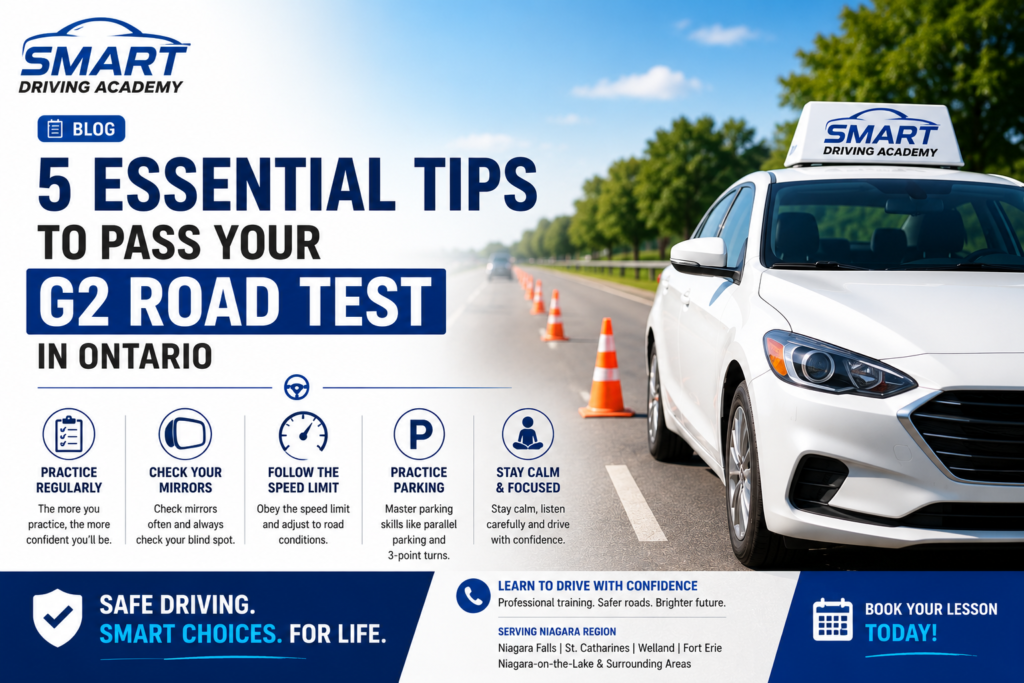
5 Essential Tips to Pass Your G2 Road Test in Ontario

Getting your G2 licence is an exciting milestone. It gives you more freedom and independence, but passing the road test requires preparation, confidence, and safe driving habits. Here are five important tips to help you prepare. 1. Practice Regularly The more time you spend behind the wheel, the more comfortable you will become. Practice in different traffic conditions, residential areas, intersections, and busier roads. 2. Check Your Mirrors Frequently During your G2 test, the examiner will pay attention to how aware you are of your surroundings. Check your mirrors regularly and always check your blind spot before changing lanes or making certain turns. 3. Follow the Speed Limit Driving too fast can be dangerous, but driving unnecessarily slowly can also affect traffic around you. Watch for posted speed limits and adjust your speed according to road and weather conditions. 4. Practice Parking Make sure you are comfortable with common parking manoeuvres, including parallel parking, roadside stops, three-point turns, and parking safely in a designated space. 5. Stay Calm and Focused Nervousness is normal. Take your time, listen carefully to the examiner’s instructions, and focus on demonstrating safe driving habits. Prepare With Smart Driving Academy Professional driving lessons can help you identify mistakes, improve your confidence, and prepare for your road test. Smart Driving Academy provides professional driving instruction and road-test preparation for students throughout the Niagara Region. Ready to become a safer and more confident driver? Contact Smart Driving Academy today to book your driving lessons.

Scroll to Top